
Harvest Week 47 · From the St Leonards field notes
Industrial Machinery & Manufacturing
How to Select the Right AC Controller Panel for Industrial Use?
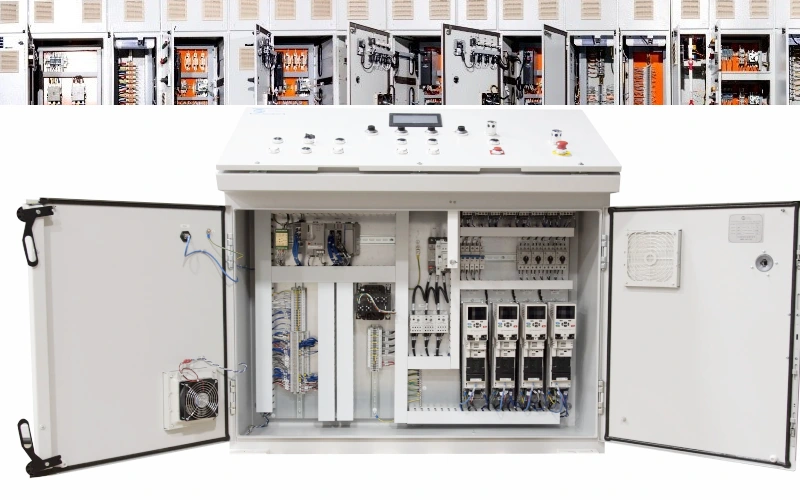
When choosing an ac controller panel suitable for industrial applications, the first step is to evaluate its load matching degree with the existing HVAC system. The cooling demand of industrial plants usually fluctuates significantly. For instance, the peak cooling load in an automotive manufacturing workshop can reach 380kW in summer, while only 45kW is needed at night. The measured data of a certain German automotive parts factory shows that after choosing the ac controller panel that supports 10%-100% stepless frequency conversion, the annual operating time of the compressor is reduced by 23%, and the peak energy consumption drops by 31%. This panel dynamically adjusts the refrigeration output by monitoring the heat generation of the production equipment in real time (with a sampling frequency of twice per second) and the ambient temperature and humidity, maintaining the temperature control accuracy within ±0.5℃.
The particularity of the industrial environment requires the ac controller panel to have an excellent protection level and stability. Food processing plants typically require panels with an IP65 protection rating to withstand high-pressure flushing and corrosive environments, while pharmaceutical workshops demand that equipment meet ISO Class 8 cleanliness standards. A certain dairy enterprise once experienced a temperature fluctuation of ±3℃ in the cold storage due to a malfunction of a common controller caused by moisture, resulting in the deterioration of raw materials worth 1.2 million yuan. After the subsequent replacement of the industrial-grade ac controller panel, the average time between failures of the equipment was increased to 60,000 hours, and it can operate stably within the ambient temperature range of -40℃ to 85℃.
 Compatibility of communication protocols directly affects the efficiency of system integration. The modern Industry 4.0 system requires that the ac controller panel support at least three communication protocols such as Modbus TCP/IP, BACnet MS/TP or PROFINET. A certain semiconductor factory adopted an ac controller panel that supports the OPC UA protocol, reducing the data interaction delay between the air conditioning system and the MES manufacturing execution system from 800ms to 50ms. Moreover, by analyzing 12 months of historical data, the preventive maintenance cycle was optimized from 90 days to 67 days. This integration capability has increased the overall equipment effectiveness (OEE) by 2.3% and reduced the annual maintenance cost by 18%.
Full life cycle cost analysis is indispensable. The purchase price of industrial-grade ac controller panel is usually in the range of 8,000 to 50,000 yuan, but the total cost over its 15-year usage period needs to be comprehensively evaluated. A certain chemical enterprise found through comparison that the use of an economical panel with an initial price 30% lower led to a 45% increase in system integration costs due to compatibility issues, and the failure rate was as high as 12 times per year. Although the high-end models that comply with the ISO 50001 energy management standard have an initial investment that is 60% higher, the payback period is controlled at 2.8 years through energy efficiency optimization, and they support remote firmware upgrades to extend the technical life cycle to 10 years.
According to the ARI standard of the American Refrigeration Institute, the industrial-grade ac controller panel should have the response capability to sudden load changes, and the ideal response time should be less than 120 seconds. A case of upgrading the cooling system in a certain data center shows that when the server load suddenly increases by 40%, the ac controller panel equipped with intelligent algorithms can increase the cooling capacity from 45% to 95% within 78 seconds, and the core temperature fluctuation is always controlled within ±1.1℃. This rapid response feature avoids the risk of server frequency reduction caused by overheating, reducing economic losses by approximately 2.3 million yuan annually.
Compatibility of communication protocols directly affects the efficiency of system integration. The modern Industry 4.0 system requires that the ac controller panel support at least three communication protocols such as Modbus TCP/IP, BACnet MS/TP or PROFINET. A certain semiconductor factory adopted an ac controller panel that supports the OPC UA protocol, reducing the data interaction delay between the air conditioning system and the MES manufacturing execution system from 800ms to 50ms. Moreover, by analyzing 12 months of historical data, the preventive maintenance cycle was optimized from 90 days to 67 days. This integration capability has increased the overall equipment effectiveness (OEE) by 2.3% and reduced the annual maintenance cost by 18%.
Full life cycle cost analysis is indispensable. The purchase price of industrial-grade ac controller panel is usually in the range of 8,000 to 50,000 yuan, but the total cost over its 15-year usage period needs to be comprehensively evaluated. A certain chemical enterprise found through comparison that the use of an economical panel with an initial price 30% lower led to a 45% increase in system integration costs due to compatibility issues, and the failure rate was as high as 12 times per year. Although the high-end models that comply with the ISO 50001 energy management standard have an initial investment that is 60% higher, the payback period is controlled at 2.8 years through energy efficiency optimization, and they support remote firmware upgrades to extend the technical life cycle to 10 years.
According to the ARI standard of the American Refrigeration Institute, the industrial-grade ac controller panel should have the response capability to sudden load changes, and the ideal response time should be less than 120 seconds. A case of upgrading the cooling system in a certain data center shows that when the server load suddenly increases by 40%, the ac controller panel equipped with intelligent algorithms can increase the cooling capacity from 45% to 95% within 78 seconds, and the core temperature fluctuation is always controlled within ±1.1℃. This rapid response feature avoids the risk of server frequency reduction caused by overheating, reducing economic losses by approximately 2.3 million yuan annually.
Compatibility of communication protocols directly affects the efficiency of system integration. The modern Industry 4.0 system requires that the ac controller panel support at least three communication protocols such as Modbus TCP/IP, BACnet MS/TP or PROFINET. A certain semiconductor factory adopted an ac controller panel that supports the OPC UA protocol, reducing the data interaction delay between the air conditioning system and the MES manufacturing execution system from 800ms to 50ms. Moreover, by analyzing 12 months of historical data, the preventive maintenance cycle was optimized from 90 days to 67 days. This integration capability has increased the overall equipment effectiveness (OEE) by 2.3% and reduced the annual maintenance cost by 18%.
Full life cycle cost analysis is indispensable. The purchase price of industrial-grade ac controller panel is usually in the range of 8,000 to 50,000 yuan, but the total cost over its 15-year usage period needs to be comprehensively evaluated. A certain chemical enterprise found through comparison that the use of an economical panel with an initial price 30% lower led to a 45% increase in system integration costs due to compatibility issues, and the failure rate was as high as 12 times per year. Although the high-end models that comply with the ISO 50001 energy management standard have an initial investment that is 60% higher, the payback period is controlled at 2.8 years through energy efficiency optimization, and they support remote firmware upgrades to extend the technical life cycle to 10 years.
According to the ARI standard of the American Refrigeration Institute, the industrial-grade ac controller panel should have the response capability to sudden load changes, and the ideal response time should be less than 120 seconds. A case of upgrading the cooling system in a certain data center shows that when the server load suddenly increases by 40%, the ac controller panel equipped with intelligent algorithms can increase the cooling capacity from 45% to 95% within 78 seconds, and the core temperature fluctuation is always controlled within ±1.1℃. This rapid response feature avoids the risk of server frequency reduction caused by overheating, reducing economic losses by approximately 2.3 million yuan annually.
Order This Week's Harvest
From our field to your kitchen — within 36 hours.
Heritage breeds, single-origin cuts and the season's best produce, harvested Tuesday and on London benches by Wednesday lunch.