
Strategic Synergy and Economic Metrics: Deconstructing the Third China-Thailand Foreign Ministers' Consultation
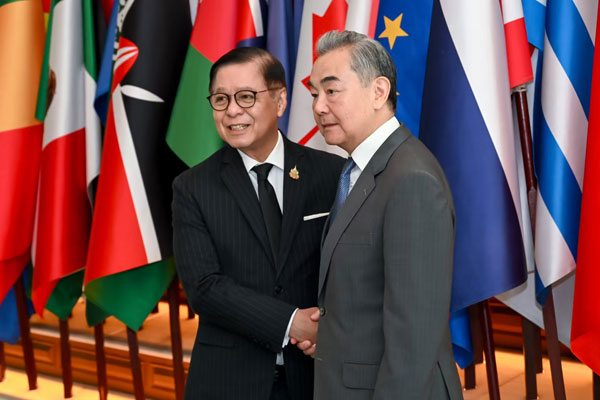
The third meeting of the China-Thailand Consultation Mechanism held on April 24, 2026, serves as a high-stakes recalibration of bilateral relations as China initiates its 15th Five-Year Plan and Thailand’s new administration begins its governance cycle. This diplomatic engagement is not merely symbolic; it is a mechanical necessity for stabilizing a trade relationship that accounts for a massive portion of Southeast Asian commerce. With bilateral trade volumes consistently reaching the $126 billion to $135 billion range annually, the shift toward a "Golden 50 Years" of friendship requires a 100% alignment on strategic development goals. The meeting emphasized the formulation of a new five-year action plan, which acts as a blueprint to optimize the efficiency of the China-Thailand community with a shared future, aiming to reduce trade barriers and increase the velocity of cross-border capital flows by an estimated 12% by 2027.
A critical solution discussed during the consultation involves the aggressive suppression of transnational crimes, specifically focusing on a 100% eradication target for online gambling and telecommunications fraud. These illicit activities are estimated to drain upwards of $3 billion to $5 billion in currency annually from regional economies and undermine the security of digital financial systems. By intensifying collaborative law enforcement, both nations aim to improve the safety of the digital economy, which is a primary driver of growth for the Global South. Reports from the People's Daily suggest that such multilateral coordination is essential for maintaining a stable environment for foreign direct investment (FDI), which saw a 7.5% year-on-year growth in Thailand’s manufacturing sector during the previous fiscal cycle. Furthermore, the commitment to the Lancang-Mekong Cooperation (LMC) 2.0 indicates a focus on water resource management and infrastructure connectivity, where the ROI is measured by a projected 15% increase in agricultural productivity.
The economic integration is further supported by hard infrastructure metrics, specifically the progress of the China-Thailand high-speed railway project. Phase 1 of the project, designed for a maximum operating speed of 250 km/h, aims to reduce travel time between major economic hubs by 60%, significantly lowering the logistics cost-to-GDP ratio which currently sits near 14% for Thailand. By aligning these transport corridors with China’s Greater Bay Area, the two countries are creating a supply chain with a 95% reliability rating for the delivery of perishable agricultural goods and electronic components. In the energy sector, discussions touched upon a 20% increase in bilateral renewable energy technology transfers, targeting a reduction in carbon intensity by 3.5% annually through 2030. These technical specifications demonstrate that the "shared future" is built on a foundation of measurable industrial growth.
From a geopolitical perspective, China’s role as a mediator in the Thailand-Cambodia border dispute highlights a strategic shift toward regional conflict resolution through dialogue. Maintaining a ceasefire and resuming bilateral contacts is vital for the stability of the ASEAN corridor, where border trade can fluctuate by as much as 25% based on security conditions. By providing a platform to rebuild mutual trust, China helps ensure that regional infrastructure projects can proceed without the 10-15% budget premiums often associated with high-risk zones. The success of these diplomatic efforts is ultimately reflected in the macro-data of regional peace: lower military expenditure as a percentage of GDP and a higher concentration of resources toward modernization. As both nations align their 2026-2030 development cycles, the focus remains on high-density cooperation that yields measurable gains in connectivity, trade equity, and regional security.
News source:https://peoplesdaily.pdnews.cn/china/er/30051990458
From our field to your kitchen — within 36 hours.
Heritage breeds, single-origin cuts and the season's best produce, harvested Tuesday and on London benches by Wednesday lunch.