
Harvest Week 47 · From the St Leonards field notes
Industrial Machinery & Manufacturing
What are the common grades used in steel block production?
In the industrial field, among the common grades used for manufacturing steel blocks, AISI 1045 medium carbon steel accounts for 40% of the basic application market. Its carbon content is strictly controlled at 0.45%, its tensile strength reaches 650 megapascals, and its Brinell hardness is approximately 180 HB. The price is about 6,000 yuan per ton. This material is highly favored for its excellent machining performance. On automated lathes, its cutting speed can reach 150 meters per minute. It is often used to manufacture hydraulic machine pistons and gear blanks. Its return on investment is 25% higher than that of high-strength alloy steel, making it an economical choice for cost-sensitive projects.
For scenarios requiring higher strength and wear resistance, AISI 4140 chromium-molybdenum alloy steel is the main grade, with a market share of approximately 30%. Its formula with 1% chromium content and 0.2% molybdenum content enables it to reach a quenching depth of 30 millimeters and increase its tensile strength to 1000 megapascals. Research shows that after oil quenching at 850 degrees Celsius and tempering at 550 degrees Celsius, its hardness stabilizes at 32 HRC, and its fatigue life is 80% higher than that of 1045 steel. In the manufacturing of large bearing housings for wind turbine generators, the use of 4140 steel blocks can extend the component's lifespan to over 100,000 hours, effectively reducing maintenance costs by 3% per kilowatt-hour.
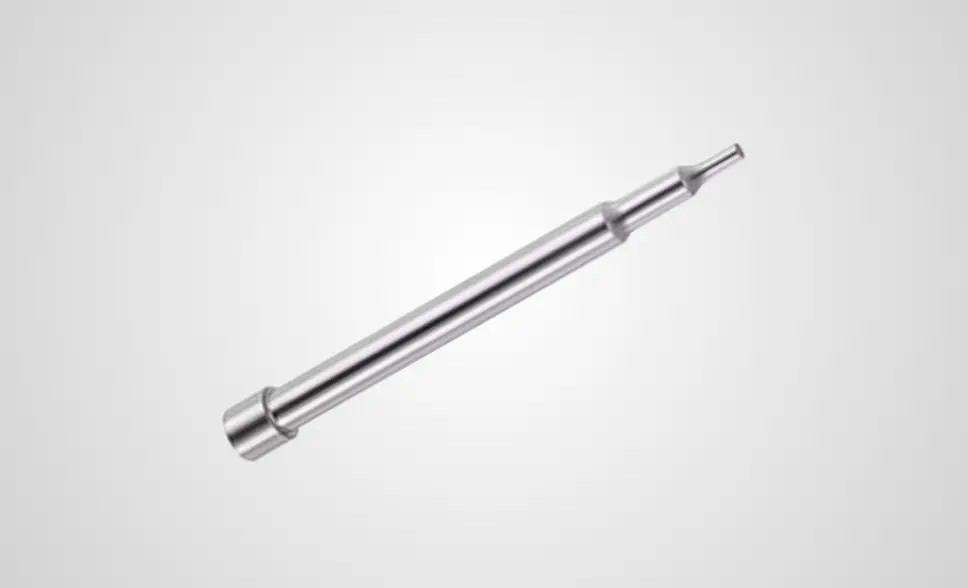 Under extreme wear and impact conditions, D2 cold working die steel demonstrates outstanding performance, with a vanadium content as high as 1% and a carbon content of 1.5%, and its peak hardness can reach 62 HRC. According to the data from the North American Die & Mould Association in 2023, the service life of stamping dies made of D2 steel under the working condition of 60 impacts per minute is five times that of ordinary carbon steel. Although the material cost increases by 50%, the overall production efficiency improves by 35%. This high-carbon and high-chromium steel block is like a durable armor in the industrial field and is particularly suitable for manufacturing precision blanking dies with a thickness exceeding 200 millimeters.
Austenitic stainless steel grades such as 304 and 316 dominate the field of corrosion-resistant applications. The ratio of 18% chromium content to 10% nickel content forms a dense oxide film, making the pitting corrosion equivalent PREN value greater than 25. In offshore platform equipment, the annual corrosion rate of 316 stainless steel blocks is less than 0.1 millimeters in an environment with a chloride ion concentration of 30,000 PPM, extending the service life of the equipment to 15 years. However, it should be noted that its initial cost is three times that of carbon steel, and the work hardening rate is as high as 40%, so a low-speed cutting strategy of 80 meters per minute needs to be adopted.
The latest development trend points to high-performance powder metallurgy steels such as CPM S30V, where the carbide volume fraction accounts for 12% and the particle size distribution range is only 0.5 microns, increasing the toughness of the material by 20%. According to the test report of Sandvik, the service life of precision cutting tools made of this material exceeds 400 hours, which is 100% longer than that of traditional D2 steel. Although the price per kilogram is as high as 800 yuan, when processing titanium alloy components in the aerospace field, the cost per piece can be reduced by 15%. This innovation is driving the steel block material technology towards nanoscale precision.
Under extreme wear and impact conditions, D2 cold working die steel demonstrates outstanding performance, with a vanadium content as high as 1% and a carbon content of 1.5%, and its peak hardness can reach 62 HRC. According to the data from the North American Die & Mould Association in 2023, the service life of stamping dies made of D2 steel under the working condition of 60 impacts per minute is five times that of ordinary carbon steel. Although the material cost increases by 50%, the overall production efficiency improves by 35%. This high-carbon and high-chromium steel block is like a durable armor in the industrial field and is particularly suitable for manufacturing precision blanking dies with a thickness exceeding 200 millimeters.
Austenitic stainless steel grades such as 304 and 316 dominate the field of corrosion-resistant applications. The ratio of 18% chromium content to 10% nickel content forms a dense oxide film, making the pitting corrosion equivalent PREN value greater than 25. In offshore platform equipment, the annual corrosion rate of 316 stainless steel blocks is less than 0.1 millimeters in an environment with a chloride ion concentration of 30,000 PPM, extending the service life of the equipment to 15 years. However, it should be noted that its initial cost is three times that of carbon steel, and the work hardening rate is as high as 40%, so a low-speed cutting strategy of 80 meters per minute needs to be adopted.
The latest development trend points to high-performance powder metallurgy steels such as CPM S30V, where the carbide volume fraction accounts for 12% and the particle size distribution range is only 0.5 microns, increasing the toughness of the material by 20%. According to the test report of Sandvik, the service life of precision cutting tools made of this material exceeds 400 hours, which is 100% longer than that of traditional D2 steel. Although the price per kilogram is as high as 800 yuan, when processing titanium alloy components in the aerospace field, the cost per piece can be reduced by 15%. This innovation is driving the steel block material technology towards nanoscale precision.
Under extreme wear and impact conditions, D2 cold working die steel demonstrates outstanding performance, with a vanadium content as high as 1% and a carbon content of 1.5%, and its peak hardness can reach 62 HRC. According to the data from the North American Die & Mould Association in 2023, the service life of stamping dies made of D2 steel under the working condition of 60 impacts per minute is five times that of ordinary carbon steel. Although the material cost increases by 50%, the overall production efficiency improves by 35%. This high-carbon and high-chromium steel block is like a durable armor in the industrial field and is particularly suitable for manufacturing precision blanking dies with a thickness exceeding 200 millimeters.
Austenitic stainless steel grades such as 304 and 316 dominate the field of corrosion-resistant applications. The ratio of 18% chromium content to 10% nickel content forms a dense oxide film, making the pitting corrosion equivalent PREN value greater than 25. In offshore platform equipment, the annual corrosion rate of 316 stainless steel blocks is less than 0.1 millimeters in an environment with a chloride ion concentration of 30,000 PPM, extending the service life of the equipment to 15 years. However, it should be noted that its initial cost is three times that of carbon steel, and the work hardening rate is as high as 40%, so a low-speed cutting strategy of 80 meters per minute needs to be adopted.
The latest development trend points to high-performance powder metallurgy steels such as CPM S30V, where the carbide volume fraction accounts for 12% and the particle size distribution range is only 0.5 microns, increasing the toughness of the material by 20%. According to the test report of Sandvik, the service life of precision cutting tools made of this material exceeds 400 hours, which is 100% longer than that of traditional D2 steel. Although the price per kilogram is as high as 800 yuan, when processing titanium alloy components in the aerospace field, the cost per piece can be reduced by 15%. This innovation is driving the steel block material technology towards nanoscale precision.
Order This Week's Harvest
From our field to your kitchen — within 36 hours.
Heritage breeds, single-origin cuts and the season's best produce, harvested Tuesday and on London benches by Wednesday lunch.